Three giraffe species occur in Kenya. That simple fact drives plenty of safari itineraries, because few places let you compare Masai, reticulated, and Nubian giraffes in the wild. This kenya safari giraffe species guide explains how to tell the three apart and where to find each one. Use it to shape your route, not just your species checklist.
How many giraffe species are found in Kenya?
Kenya is home to three giraffe species: Masai, reticulated, and Nubian giraffes. Reticulated giraffes are associated mainly with northern and northeastern Kenya. Masai giraffes occur in southern savannas, and Nubian giraffes survive in smaller, fragmented populations across western and central Kenya. Older safari sources may call Nubian giraffes Rothschild’s giraffes.
The straightforward answer matters because many older travel articles list only two species or use outdated names. Current taxonomy recognizes the three above, so start your safari planning from there.
Kenya Safari Giraffe Species Guide: Field ID in Three Steps
For a quick field check, focus on the coat pattern, the lower legs, and the location. Here is how each species looks in the order you are most likely to meet it.
- Masai giraffe
Masai giraffes have irregular, jagged-edged brown patches that resemble oak leaves or vines, with uneven pale lines between them. They are the characteristic giraffe of southern Kenya and can be seen around Amboseli, the Masai Mara, Nairobi National Park, Tsavo, and the Chyulu Hills. Their pattern is usually the quickest field clue. If you are deciding between Amboseli and the Masai Mara, both offer reliable sightings.
- Reticulated giraffe
Reticulated giraffes are recognized by sharply defined reddish-brown or liver-colored polygonal patches separated by thin, bright white lines. They belong mainly to northern Kenya, including Samburu, Buffalo Springs, Shaba, Marsabit, and surrounding conservancies. A Samburu giraffe safari is the classic way to see them. Their clean, net-like pattern makes them especially easy to identify in photographs.
- Nubian giraffe
Nubian giraffes, often called Rothschild’s giraffes in safari literature, typically have large chestnut patches separated by pale lines and mostly unmarked lower legs. In Kenya, they occur in limited western and central populations, including protected and reintroduced areas around Lake Nakuru, Baringo, Ruma, and Soysambu. They are the rarest of Kenya’s three giraffe types.
If the coat pattern is confusing, check the location first. A giraffe in Samburu is almost certainly reticulated; a giraffe in the Masai Mara is almost certainly Masai. That regional split makes it easier to focus your field skills.
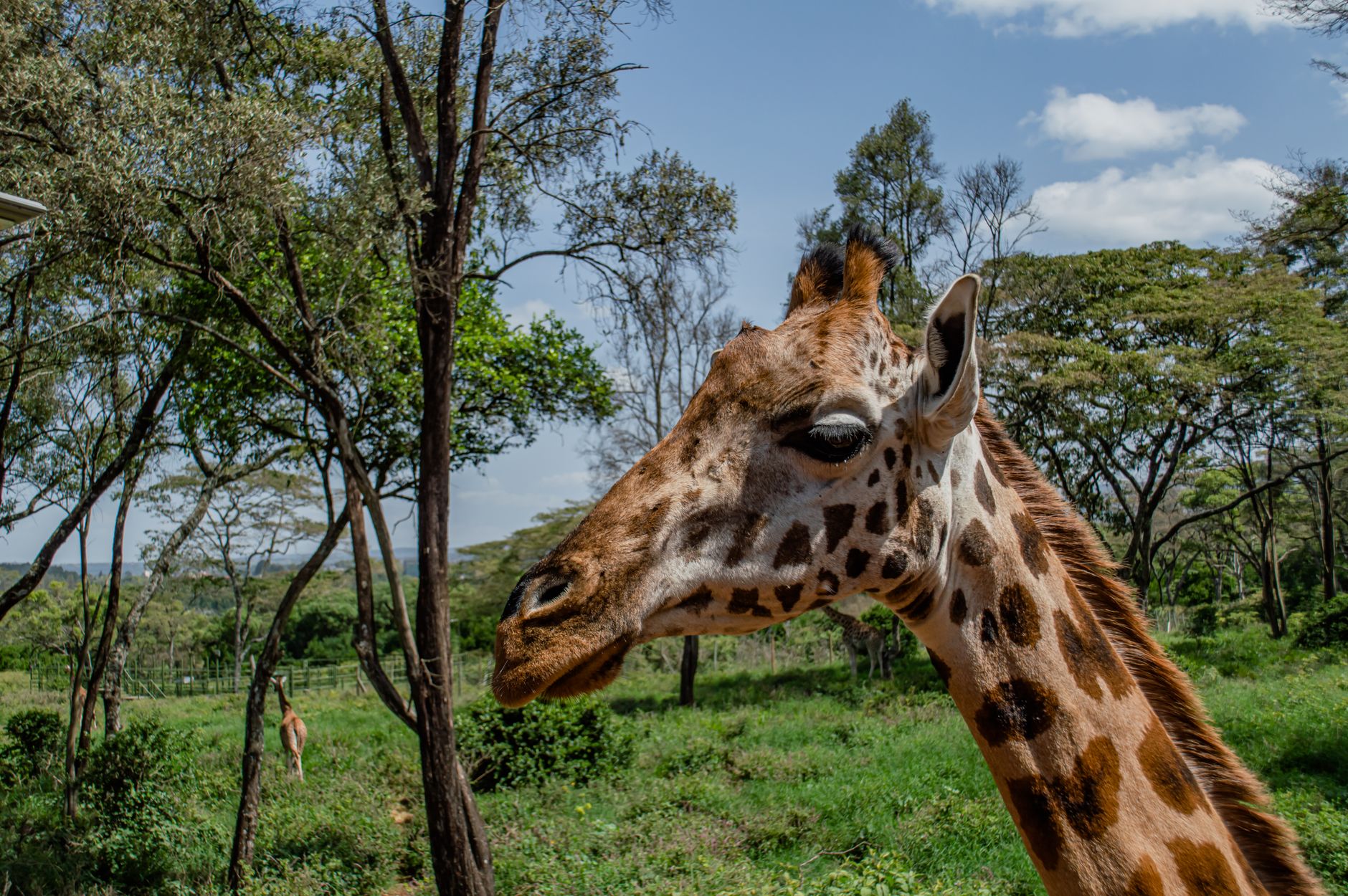
One more tip for your field notes: photograph the neck and upper body from the side. Individual giraffes have unique spot patterns, and a clear side profile helps you compare species marks when you check your images back at camp.
Where can I see each giraffe species in Kenya?
Choose northern Kenya, especially Samburu, Buffalo Springs, Shaba, or nearby conservancies, for reticulated giraffes. Choose Amboseli, the Masai Mara, Nairobi National Park, or Tsavo for Masai giraffes. Choose western or central locations such as Lake Nakuru, Baringo, Ruma, or Soysambu for Nubian giraffes. A multi-region itinerary offers the best chance of seeing all three.
The table below gives the same information in a compact form.
| Giraffe species | Best viewing areas | Field ID clue |
|---|---|---|
| Masai giraffe | Amboseli, Masai Mara, Nairobi NP, Tsavo, Chyulu Hills | Jagged, oak-like patches with uneven pale lines |
| Reticulated giraffe | Samburu, Buffalo Springs, Shaba, Marsabit, northern conservancies | Polygonal patches divided by thin white lines |
| Nubian giraffe | Lake Nakuru, Baringo, Ruma, Soysambu | Large chestnut patches, mostly pale lower legs |
Seeing all three usually means combining at least two safari regions. A route that pairs the Masai Mara or Amboseli with Samburu gives you Masai and reticulated giraffes in separate landscapes. Adding Nubian giraffes means a stop in central or western Kenya, often at Lake Nakuru. The honest trade-off is time: every region switch costs driving hours or a short flight. If you only have a week, pick one ecosystem and enjoy its giraffes deeply rather than rushing across the country. Our Masai Mara vs Amboseli guide can help you choose between those two southern hubs.
What is the best time to watch giraffes on safari?
Giraffes are easiest to observe when they are browsing slowly in open woodland or crossing open plains, where their height makes them visible above surrounding vegetation. Early morning and late afternoon usually provide softer light, cooler conditions, and more active wildlife viewing. Watch for browsing, necking contests between males, courtship, calf protection, and alert herd behavior.
Giraffes do not follow the same dramatic migration as wildebeest, so they are present year-round in most parks. Dry months often make them easier to find because trees lose leaves and animals concentrate near water. Early mornings and late afternoons also bring better light for photography. If you are shooting with a large lens, check safari vehicle space for large cameras before you book.
During the hottest part of the day, giraffes may stand under shade or rest in groups, so plan your main game drives for the cooler hours.
Are giraffes endangered in Kenya?
Kenya’s giraffes face habitat loss, fragmentation, changing land use, and pressure outside protected areas, although important populations survive in parks, conservancies, and community rangelands. Conservation priorities differ by species: reticulated giraffes need connected northern landscapes, Masai giraffes need secure southern ecosystems, and Nubian giraffes need protection and recovery of small isolated populations.
Giraffe conservation in Kenya depends on different strategies for each species. Visitors can support these efforts by choosing responsible operators and sometimes by joining wildlife conservation opportunities in Kenya. If you are planning a safari wardrobe, keep in mind that bright colors can spook animals; see our guide to what to wear on safari before you pack.
Some conservancies run community ranger programs or translocation projects. Asking about those when you choose an operator can make your safari dollars go further.
Ready to Compare Safari Operators?
The best giraffe safari depends on your park choices and your patience for long drives. Use the species ID tips above to set your target, then compare safari operators on FindMySafari, browse packages from Valley Safaris, or check Trunktrails Safaris for routes that cover your chosen regions. Pick the operator whose itinerary gives you the right species without cramming too much into each day.
More safari planning resources
- Amboseli map and guide from SafariPure
- Masai Mara Great Migration guide from Trunktrails Safaris
- Map of Amboseli from Valley Safaris
- Amboseli destination guide on FindMySafari